Romania Government Scholarship 2027: Fully Funded MFA Scholarship for Pakistani Students
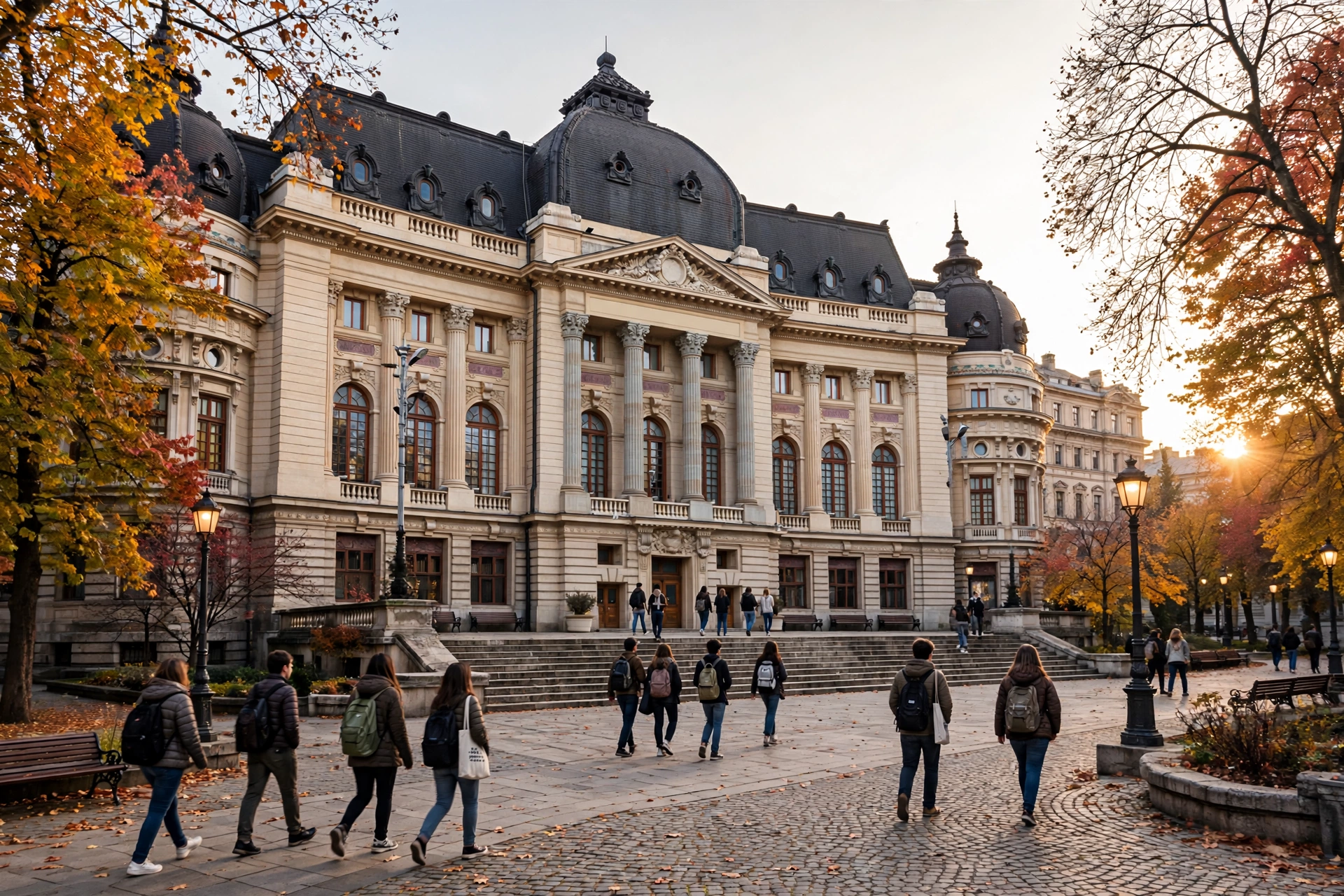
The Romania Government Scholarship is the Romanian Ministry of Foreign Affairs award for students from countries outside the EU, and Pakistanis qualify. It waives full tuition, covers dorm housing and pays a monthly stipend of 65 euro for bachelors, 75 euro for masters and 85 euro for PhD. The 2026 window ran 16 February to 31 March 2026 and results came out around 15 July 2026. The 2027 call is not announced yet, so you cannot apply today. Prepare your documents now and watch the MFA page and the Study in Romania platform from January 2027.
- The 2026 cycle is closed: applications ran 16 February to 31 March 2026 and results came out around 15 July 2026.
- The 2027 call is not announced yet. No 2027 deadline exists on the official MFA page, so do not trust any site that prints one.
- Fully funded: full tuition waiver, free student dorm housing, monthly stipend of 65 to 85 euro by level, plus fee waivers.
What the MFA scholarship actually is
Romania runs this scholarship through its Ministry of Foreign Affairs, known as the MFA, working with the Ministry of Education. Each year the Romanian state offers a number of scholarships to citizens of countries outside the EU. Pakistan is one of those countries, so Pakistani students qualify on nationality alone.
The award funds bachelors, masters and PhD study at Romanian public universities. That range matters, because most big government scholarships skip bachelors entirely. If you finished FSc or A levels and want a funded degree in Europe, this is one of the few doors that is open to you at all.
The 2026 call offered 85 scholarships across all levels and countries. The MFA has not published a number for 2027 yet, so treat 85 as the shape of the programme, not as a promise for next year.
Official information checked 13 November 2026. The MFA page still shows the 2026 call, and the 2027 dates below are the honest position, not a guess dressed up as a deadline.
The 2027 picture: confirmed, expected and unknown
Here is the position in plain terms, split into what the MFA has published, what past years suggest, and what nobody knows yet.
| Point | Status |
|---|---|
| 2026 applications | Ran 16 February to 31 March 2026, through the Study in Romania platform only |
| 2026 results | Announced around 15 July 2026, by email |
| 2027 call | Not announced yet. The MFA page still shows the 2026 dates |
| 2027 opening | Expected around February 2027, based on the yearly pattern. Unconfirmed |
| 2027 deadline | Not announced. Any site printing a 2027 date today is guessing |
| 2027 results | Unknown until the call opens |
The pattern repeats most years, so a February opening and a late March deadline is a fair working guess for your planning. It is not a date you can book a flight around. Check the MFA page from January 2027, and check the Study in Romania platform in the same weeks, because the call appears on both.
If you need an open window today rather than next year, check Stipendium Hungaricum and Turkiye Burslari. Both run on similar cycles and fund similar levels.
The money, honestly
| What you get | Details |
|---|---|
| Tuition | Fully waived for the language year and the whole degree programme |
| Monthly stipend | 65 euro for bachelors, 75 euro for masters, 85 euro for PhD, paid during the study cycle |
| Housing | Free place in a student dorm, subject to availability and coordination with your university |
| Fee waivers | No application, registration, language testing or admission contest fees |
| Health | Medical assistance during the scholarship period |
Two honest points about the money. First, the stipend is low by Western European standards. Romania is cheaper than France or Germany, but 65 euro a month does not cover real city life in Bucharest. The free tuition and the free dorm are the real prize here. Budget family support or part time options for food, transport and everything else.
Second, no airfare is listed as a standard benefit in the official programme information. Do not assume the MFA will pay your flight to Romania. Plan the ticket yourself, and keep enough saved for the first month before the stipend starts flowing.

The Romanian language year
This is the part that decides whether this scholarship is for you, so read it carefully.
Bachelors and masters programmes are taught in Romanian. Only Romanian. If you do not speak it, the scholarship adds a free one year Romanian language course before your degree starts, and that year is also fully funded, with tuition waived and the stipend paid.
PhD applicants have it easier. Doctoral programmes can run in English or another foreign language if the doctoral school allows it. Check the specific doctoral school, not just the university, because the language of a PhD is set at that level.
My honest take: the language requirement scares away most Pakistani applicants, and that is exactly why Romania is easier to win than the famous names. If you can picture yourself learning a new language for a year, your competition shrinks fast. The prep year also gives you a full year to settle in, make friends and learn how the university works before your degree starts.
Who qualifies and who does not
Apply if you are:
- A citizen of a country outside the EU. Pakistan qualifies.
- Holding an average of at least 7 on the Romanian grading scale in your last completed level, which the MFA describes as a Good rating. Grade conversion goes through the Romanian embassy, so confirm your marks qualify before you invest weeks in the file.
- Applying in any field except medicine, dentistry and pharmacy.
- Not a Romanian citizen, not part of the diplomatic corps or staff of international organisations in Romania, and not a past recipient of this scholarship for the same study cycle.
Do not apply if you are:
- A pre medical student hoping for an MBBS seat. Romania excludes medicine, dentistry and pharmacy outright, every cycle.
- Unwilling to spend a year learning Romanian. The language year is compulsory for bachelors and masters, not optional.
- Below the Good band in your last results. This is a merit award and Pakistan sends a large number of applicants, so weak grades do not survive the first screen.
Your documents, ticked off as you go
Start gathering these now, while the 2027 call is still unannounced. The students who submit on day one are the ones whose papers were ready in December.
Tick each item off as you prepare it:
Print it and tick it off: Romania Documents Checklist (PDF)
The full checklist above as a printable one page PDF, with the 2027 status and the official links on it. Keep it with your file.
Start the IBCC and HEC attestation chain early if any of your documents need it for the visa stage later. Our full documents checklist covers the timeline, because attestation always takes longer than students expect.
If you are applying from Pakistan
This section is for Pakistani applicants. The rest of the guide applies to everyone, from any country.
- Grades and conversion: your board or university marks must convert to at least 7 on the Romanian scale, the Good band. Ask the Romanian embassy in Islamabad how your marks convert before you build the whole file around them. A strong Pakistani percentage does not automatically map to a strong Romanian grade.
- Attestation and legalisation: Pakistan is not part of the Hague Apostille system, so expect a multi step legalisation chain for your documents: attestation in Pakistan, then legalisation through the Romanian embassy. Start this in December, not in March, because each step depends on a different office.
- Birth certificate and translations: get your birth certificate from NADRA or your union council early, and use an authorised translator for anything that must go in English, French, Spanish or Romanian. A translation done by a friend does not count.
- Medical certificate: you need this at enrolment, not at application, but get it done in Pakistan before you travel. A certificate from a recognised hospital, with an authorised translation if it is in Urdu, saves a stressful search in Bucharest.
- Visa after selection: once you are selected you receive a Letter of Acceptance, and then the visa process starts through the Romanian embassy. Official visa guidance for students applies once you are selected, so read it while you wait for the 2027 call.
- Realistic timeline: December to January, gather and attest documents. February, watch the MFA page daily and create your platform account the day the call opens. March, submit well before the deadline, because the portal slows down in the final days. July, results. August to September, visa and travel.
- Common rejection reasons: marks below the Good band, a blurry or incomplete scan, a missing birth certificate, applying for medicine, dentistry or pharmacy, and submitting by email instead of the platform. Email applications are ignored, every year.
How the application runs, step by step
- Watch the MFA page from January 2027 for the official announcement of the new cycle.
- Create an account on the Study in Romania platform. Applications are submitted only through this platform. Files sent by email are ignored.
- Complete your file and upload every document as a clear scan.
- Choose your programmes and universities, then submit. The deadline usually falls at the end of March, and the portal slows down in the final days, so do not leave it to the last weekend.
- Results are announced around mid July, by email, and then the visa process starts.
Why the quiet scholarships win
Most Pakistani students chase the same five famous names: Fulbright, Chevening, Commonwealth, Erasmus Mundus, DAAD. Romania gets a fraction of those applicants, and it still funds bachelors, which the famous names mostly do not touch. If your marks are good but not elite, and you are willing to give one year to the language, this is one of the most undervalued fully funded options on this site.
The second undervalued point: the Russian Government Quota works almost the same way, language year and all. Students who prepare for one can prepare for both with the same document file. And if Asia appeals more than Europe, MEXT Japan runs a similar government funded model with its own prep year.
Official links
Frequently asked questions
Is the Romania Government Scholarship open now?
No. The 2026 cycle closed on 31 March 2026 and the MFA has not announced the 2027 call yet. The official MFA page still shows the 2026 dates. Watch mae.ro and the Study in Romania platform from January 2027, and use the waiting time to prepare your documents.
How much money does the Romania scholarship actually pay?
Tuition is waived for the language year and the whole degree, dorm housing is covered, and a monthly stipend is paid: 65 euro for bachelors, 75 euro for masters and 85 euro for PhD. No airfare is listed as a standard benefit, so budget your flight yourself and plan family support or part time work for city living costs.
Do I have to learn Romanian?
For bachelors and masters, yes in practice. Those programmes are taught in Romanian only, and the scholarship adds a free one year Romanian language course before your degree if you do not speak the language. PhD programmes can run in English or another foreign language if the doctoral school allows it.
What grades do I need?
You need an average of at least 7 on the Romanian grading scale in your last completed level, which the MFA describes as a Good rating. Grade conversion goes through the Romanian embassy, so confirm your marks qualify before you invest weeks in the file.
Can I study medicine on this scholarship?
No. Medicine, dentistry and pharmacy are excluded every year, with no exceptions. If you want a medical seat, look at Turkiye Burslari or Stipendium Hungaricum instead, which do fund medical programmes.